TL;DR
- Ask every vendor to define whether its demand figure is an observed prompt count, modeled estimate, topic-level volume, relative score or candidate-prompt signal.[11][5]
- Require market- and segment-level evidence because a large overall panel or database does not prove adequate coverage for your country, language or engine.[20][8]
- Compare refresh cadence, latency, deduplication rules and repeated-run stability before treating prompt rankings as reliable.[5]
- Test the complete handoff from research to tracking, including quota impact, exports, API access and preservation of prompt provenance.[5]
- Price the actual workflow in checks, credits, tracked prompts, AI answers, engines, markets, seats and overages rather than relying on a single headline plan limit.[32][31]
Contents
- 1. Where do the suggested prompts come from?
- 2. What exactly does one volume or demand number count?
- 3. How many panelists and prompts represent your market?
- 4. What panel bias can affect the results?
- 5. How often is the data refreshed?
- 6. Which countries, languages and engines have adequate coverage?
- 7. How are near-identical prompts deduplicated?
- 8. How many prompts and repeated runs are needed for a reliable pilot?
- 9. Can you export the research data and use an API?
- 10. How does a researched prompt become a tracked prompt?
- 11. What does the price actually meter?
- 12. What is the all-in cost for your actual use case?
- What should a two-week pilot include?
- Panel data versus clickstream versus keyword-derived estimates
- FAQ
- Sources
The best prompt research vendor is not necessarily the one showing the largest prompt database or highest demand number. Before buying, ask how prompts are sourced, what each metric counts, how representative the data is, how often it changes, and how research becomes trackable prompts.
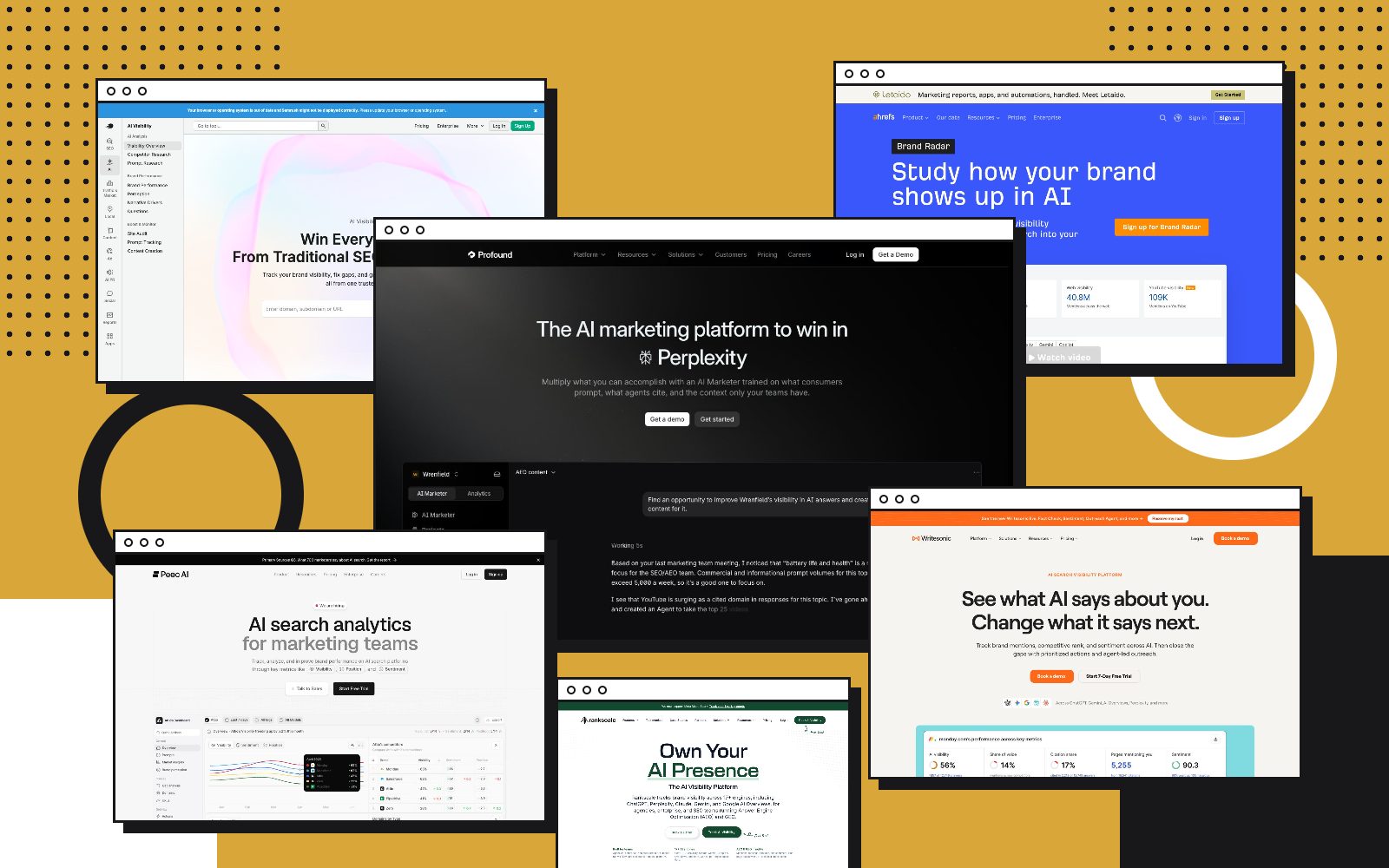
This checklist compares what selected vendors publicly disclose. “Not published” means the cited vendor material does not specify the detail; it should remain an open procurement question rather than a favorable assumption.
At a glance: what do vendors publish about their data?
| Vendor | Published data source or method | What the demand figure means | Material gaps |
|---|---|---|---|
| Profound | Double-opt-in consumer-panel data from millions of opted-in AI-assistant users, with probabilistic demographic and geographic modeling; it says it does not use synthetic or simulated data.[1] | Tens of millions of prompts per month are reported, but the exact volume denominator is not published.[1] | Detailed panel composition, market-level counts and deduplication method are not published.[2][3] |
| Semrush | Its research database is described as 317M+ AI queries, and Semrush separately says its research is informed by real clickstream data from ChatGPT and other AI platforms.[4] | AI Volume is estimated topic activity on a selected AI platform; related-topic volume is estimated monthly activity across related topics.[4] | Complete language and country coverage for the research report are not published in the cited material.[5][6] |
| Ahrefs | Uses Google People Also Ask data, its keyword database, PAA expansion and semantic Fanout.[7] | AI-adjusted volume is modeled from a parent keyword and platform-specific AI-to-Google traffic ratios; it is not a direct count of AI prompts.[8] | Detailed prompt sample size and deduplication rules are not published.[5] |
| Peec AI | Combines real-time search trends, AI-conversation data and external industry signals, then identifies prompt themes and matches them to existing searches.[9] | Prompt Volume is an industry-relative demand score from 1 to 5, not a disclosed absolute prompt count.[9] | Sample size, update latency and geography/language coverage are not published.[5] |
| Otterly.AI | Uses estimated intent volume based on Google monthly search volume, AI-platform visit ratios and growth trends.[10] | Estimated potential demand for similar questions or intents, not a disclosed count of observed prompt submissions.[5] | Exact denominator, sample size, refresh cadence, geography and language coverage are not published.[3] |
| Scrunch | Describes a blend of browser-extension or clickstream providers, automated clean-slate AI-response collection and consented consumer panels.[11] | Topic-level, directional estimates; scaling may multiply a small raw sample by 100 times or more.[11] | Sample size, refresh cadence, language coverage and country coverage are not published.[12][5] |
| Writesonic | Prompt Explorer lists AI conversations, public forums and partner or industry data; its launch material also names Google Keyword Planner, Reddit, People Also Ask and chat data.[6] | Estimated monthly demand across AI platforms, with semantically similar prompts grouped into a unified signal.[6] | Its cited pages report different conversation-scale claims and do not reconcile them; language coverage and refresh cadence are not published.[6] |
| Finseo | Describes prompt suggestions built from search volume, personas and intent, including category, comparison, alternative, pricing and integration questions.[13] Its enterprise page lists SSO via SAML, roles per project, an audit trail and unlimited seats. Finseo is hosted in Frankfurt, Germany with EU data residency, is GDPR-compliant with a data processing agreement (DPA) and is ISO 27001 certified. | A prompt-demand unit or panel methodology is not published in the cited material.[2][3] | Product-coverage claims do not establish panel representativeness.[5] |
The vendors therefore do not report one common metric. Some describe observed conversations, some model search demand, some provide topic estimates or relative scores, and some primarily generate candidate prompts for tracking.[5][14]
1. Where do the suggested prompts come from?
Question to ask: “Which source signals create the suggested prompts, and which are actual user prompts?”
Why it matters
A suggestion may come from an opted-in panel, search-query corpus, clickstream, an LLM-generated expansion, public forums or a blend of sources. These inputs answer different questions: observed behavior can indicate what users submitted, while semantic expansion can help produce a broader monitoring set.[5]
Ahrefs, for example, distinguishes People Also Ask data tied to searched queries from semantic Fanout expansion.[7] Semrush says its research is informed by AI-platform clickstream data.[15][4] Finseo describes suggestions built from search volume, personas and intent rather than publishing a panel-based observation methodology.[5]
What a good answer looks like
A vendor should name each input source and explain:
- Whether it contains real user submissions or inferred prompts
- Which prompts are generated, expanded, clustered or translated
- What source record supports each suggestion
- What data is excluded
- Whether demand is measured before or after transformations
Ask for an example showing the lineage from raw observation or source signal to the final suggested prompt. “Proprietary data” is not enough; the vendor should still identify the source categories and processing steps.
2. What exactly does one volume or demand number count?
Question to ask: “What is the numerator, denominator, time window and unit behind this number?”
Why it matters
“Volume” can mean estimated searches for a topic, estimated monthly prompt submissions, a relative score, or weighted intent demand. Semrush defines AI Volume as estimated searches for a topic on a selected platform.[4][15] Peec publishes a relative 1-to-5 demand score rather than a disclosed absolute count.[16][5] Otterly describes estimated intent volume based partly on Google search volume and AI-visit ratios.[8]
Writesonic describes average search volume as an estimate of how often a prompt is asked across major generative AI platforms per month and says semantically similar prompts can be grouped into one demand signal.[6] That figure should not automatically be compared with Peec’s relative score or Semrush’s topic-level estimate.
What a good answer looks like
Ask the vendor to define:
- The counted object: people, sessions, prompt strings, topics, clusters or estimated intent
- The date range and update period
- The engines and markets included
- How repeat submissions are treated
- Whether the number is observed, modeled or weighted
- Whether the metric is comparable across countries, industries and languages
If the vendor publishes a score instead of a count, ask what each score level means and whether scores are comparable between markets. A number without a denominator is not a decision-ready volume metric.
3. How many panelists and prompts represent your market?
Question to ask: “How many panelists and prompt observations are behind the estimate for our target country, language, engine and audience?”
Why it matters
A large platform-wide total can conceal a very small sample in a particular market. Profound reports millions of active panel users and tens of millions of prompts per month, but its cited FAQ does not publish detailed panel composition or market-level counts.[1] Scrunch describes several input types but does not publish a panel size in the cited material.[5]
The American Association for Public Opinion Research cautions that panel size alone does not establish quality and recommends checking whether a panel contains enough respondents for the intended population segments.[17]
What a good answer looks like
Request segment-level figures for:
- Panelists
- Prompt observations
- Country and language
- Engine or assistant
- Observation period
- Panel turnover
- Missing-device or undercoverage risk
The vendor should also explain recruitment, consent, retention and weighting. A total panel count is useful context, but it is not evidence that your market is adequately represented.
4. What panel bias can affect the results?
Question to ask: “What are the known sources of bias, and how do you measure them?”
Why it matters
Weighting and a large sample do not automatically remove systematic coverage or selection errors. AAPOR notes that conventional precision measures can be over-optimistic for online samples and that uncertainty intervals capture random error, not systematic bias.[17]
Research on metered web data illustrates why coverage deserves scrutiny: in one study, 80.5% to 85.7% of participants had at least one untracked device or browser. That study concerned internet-use measurement rather than AI prompt panels, so its percentages should not be treated as an AI-panel error rate.[17][5] Another web-panel study found that propensity-score adjustments improved some estimates inconsistently and moved other estimates farther from a reference survey.[2]
What a good answer looks like
A credible supplier should explain:
- Its target population and recruitment frame
- Consent and participation requirements
- Weighting variables
- Device and browser coverage
- Undercoverage and missing-data risks
- Validation benchmarks
- Segment-level uncertainty
Ask the vendor to separate random uncertainty from systematic bias. A polished margin of error does not compensate for an unexplained sampling frame.
5. How often is the data refreshed?
Question to ask: “What is the collection cadence, dashboard refresh rate and data latency?”
Why it matters
Collection frequency, model refresh and dashboard availability are different things. Profound says its Prompt Volume data is updated on a rolling weekly basis with latency under two weeks.[1] Semrush says its Prompt Research data is refreshed daily on a rolling basis.[4] Ahrefs describes monthly chatbot updates using a 90-day window and continuous updates for AI Overviews and AI Mode.[7][12]
What a good answer looks like
Ask for:
- The last observation date
- The normal refresh schedule
- Typical and worst-case latency
- Historical backfill rules
- Changes caused by source or model updates
- A change log or version history
The vendor should identify whether the stated cadence applies to raw observations, a demand model or only the dashboard.
6. Which countries, languages and engines have adequate coverage?
Question to ask: “Which markets have measured coverage rather than merely a dashboard filter?”
Why it matters
A country or language filter does not prove that the underlying sample is sufficient. Profound says its coverage is strongest in the United States, United Kingdom and selected European markets, while language details are not published in the cited FAQ.[18][1] Ahrefs says its data is strongest in English and that non-English markets are proportional, but it does not estimate actual AI usage by country.[7]
Finseo says it supports more than 150 countries and 22 AI engines, but those product-coverage claims do not disclose market-level sample sizes or representativeness.[13] Writesonic describes country-level demand breakdowns, but the cited material does not publish full language coverage or refresh cadence.[6]
What a good answer looks like
Require a coverage table showing, for each target market:
- Country
- Language
- Engine
- Source type
- Sample or observation count
- Date coverage
- Whether data is collected locally, translated or inferred
If coverage is unavailable, the vendor should say so directly rather than silently substituting another country or language.
7. How are near-identical prompts deduplicated?
Question to ask: “How do you merge similar prompts without erasing meaningful differences in intent?”
Why it matters
Prompt wording can vary while expressing the same need. However, small wording differences can also represent different buyer stages, constraints, products or local terminology. Writesonic says it groups semantically related prompts and reports a unified demand signal.[14] Semrush says a unique prompt-country-LLM combination counts as one prompt.[4] These are different aggregation levels.
What a good answer looks like
Ask for:
- The clustering or similarity method
- Rules for merging and splitting
- Examples of correct merges
- Examples of distinctions preserved
- The canonical prompt and raw variants
- Pre- and post-deduplication counts
- Market, language and intent labels
If the vendor does not publish a deduplication method, record it as unresolved. The cited Profound, Ahrefs and Scrunch materials do not specify one.[11][19]
8. How many prompts and repeated runs are needed for a reliable pilot?
Question to ask: “How will you account for variability in AI answers?”
Why it matters
A tracked prompt is an experimental probe, not a permanent fact about an AI system. A 2026 ACL study found that, in its specific English-language setup, 9% to 27% of selected questions changed their yes-or-no answer within five minutes; repeated runs also showed varying lexical similarity.[20] Those findings do not establish a universal instability rate for every engine or vendor.
An arXiv measurement framework likewise reports within-sample non-stationarity and says that its particular setup might require 40 to 50 observations for Gemini, while no fixed sample protocol met its target precision for SearchGPT within a realistic budget.[5]
What a good answer looks like
Ask the vendor to run a fixed prompt set repeatedly across the same:
- Engine
- Country
- Language
- Schedule
- Account or access tier
Require mention-rate and position distributions, answer-change rates and uncertainty estimates. Set the decision threshold before the pilot rather than treating one answer as representative.
9. Can you export the research data and use an API?
Question to ask: “Can we export demand research separately from tracked-answer data?”
Why it matters
An API for visibility metrics is not necessarily an API for prompt-demand research. Vendors publish different levels of access:
| Vendor | What the cited material says |
|---|---|
| Profound | Answer Engine Insights and Prompt Designer export tracked prompts and KPIs in CSV or JSON; whether Prompt Volume research is exportable is not published.[21] |
| Semrush | Prompt Tracking supports Excel, CSV, semicolon-separated CSV and Google Sheets exports; the cited material does not describe research-data export.[15] |
| Ahrefs | Brand Radar documents an API endpoint for prompts with JSON, PHP and XML output formats; research-data export and plan restrictions are not published on the cited endpoint page.[22] |
| Peec AI | Project chats can be exported as CSV, and its API can generate and retrieve prompt suggestions; a demand-research export format is not published.[16] |
| Otterly.AI | Exports prompts, citations, recommendations and raw responses as CSV; raw responses also support JSON. Its API accesses dashboard data on specified plans.[23][24] |
| Scrunch | Documents PDF snapshots, CSV/Excel exports and metadata exports, while developer documentation lists Query, Responses, Agent Traffic and Configuration endpoints.[25] |
| Writesonic | Its API lists tracked prompts and response metrics; Prompt Explorer export and research-to-tracking API operations are not published in the cited documents.[25][6] |
| Finseo | Its API documentation lists prompt read/create operations, read, write and export scopes, and project export endpoints.[26][27] |
What a good answer looks like
Ask for the exact:
- Data objects and fields
- Export formats
- API scopes
- Rate limits
- Retention period
- Plan requirement
- Research-versus-monitoring distinction
A vendor should demonstrate whether the export preserves source, market, language, intent, canonical prompt and raw variants.
10. How does a researched prompt become a tracked prompt?
Question to ask: “Show us the complete handoff from discovery to the first scheduled tracking run.”
Why it matters
Research and monitoring may have separate workflows and quotas. Peec’s documentation says users review generated prompts, accept them and make them active in the regular daily run; accepted prompts count toward the plan limit.[16]
| Vendor | Published handoff |
|---|---|
| Profound | Users analyze a keyword or phrase and group useful terms into lists for ongoing tracking.[28] |
| Semrush | Prompt Research can send relevant prompts to Prompt Tracking; campaigns can also accept manual entries, TXT/CSV imports or prompt suggestions.[15] |
| Ahrefs | Users generate prompts by location, language, focus area, instructions and quantity, then review and add them; custom tracking requires a saved Brand Radar report.[19] |
| Peec AI | Users review suggestions and select Track, accept individual prompts or activate all; active prompts join the daily run and count toward the limit.[16] |
| Otterly.AI | Research results arrive by email; users select prompts to track or import a CSV/text file with one prompt per line.[29] |
| Scrunch | Users select platforms and create the prompt, which moves to the Prompts tab for response collection.[30] |
| Writesonic | The cited Prompt Explorer documentation describes researching a prompt but does not publish the steps for converting it into a tracked prompt.[6] |
| Finseo | Its API can add a prompt to a project and queue it for processing; a Prompt Explorer-style handoff is not published on the cited API page.[27][26] |
What a good answer looks like
Ask the vendor to demonstrate prompt review, market and engine selection, activation, quota impact and first-run timing. Each active prompt should retain its source and rationale so that the research decision can be audited later.
11. What does the price actually meter?
Question to ask: “Are we paying per research query, tracked prompt, answer, model check, credit or seat?”
Why it matters
Pricing units are not interchangeable. Ahrefs meters custom-prompt usage in checks, with model-specific consumption.[12] Otterly defines one credit as one prompt checked once on one engine and gives Claude a higher credit multiplier.[31] Finseo publishes tracked-prompt caps alongside monthly AI-answer allowances on its pricing page.[26]
| Vendor | Published metering example |
|---|---|
| Profound | Its trial includes 50 unique prompts tracked daily for seven days across three engines and five Prompt Volume searches; Enterprise is custom-priced.[32] |
| Semrush | The cited pricing material lists a base AI Visibility Toolkit plan and separate prompt-tracking limits, while API availability depends on plan.[33] |
| Ahrefs | Custom Prompts start at $50 per month, and usage is metered in checks; five prompts checked daily on one platform equals 150 monthly checks, while Claude consumes eight checks per update.[12] |
| Peec AI | Published plans list 50, 150 and 350 tracked prompts on Starter, Pro and Advanced respectively.[24] |
| Otterly.AI | Published plans list prompt and credit limits; one prompt-engine check consumes one credit, with Claude using three credits.[31] |
| Scrunch | Core includes 125 unique prompts and 5,000 responses per month, with specified limits for engines, country and language.[34] |
| Writesonic | Published plan cards list 50, 100 and 200 tracked prompts on the cited plans, while the same page also describes a different starting price.[35] |
| Finseo | The cited pricing material lists 50, 150 and 350 prompts on Starter, Business and Growth yearly billing, with separate monthly AI-answer allowances.[36] |
What a good answer looks like
Request a written quote for your expected:
- Research queries
- Tracked prompts
- Engines
- Countries and languages
- Repeated runs
- User seats
- API calls
- Exports
- Storage
- Overage
Ask what happens at the quota boundary. Unlimited seats do not necessarily mean unlimited research, and a prompt quota does not necessarily include unlimited engine checks.
12. What is the all-in cost for your actual use case?
Question to ask: “What will we pay for our intended number of prompts, engines, markets, runs, seats and exports?”
Why it matters
A prompt quota may differ from a query quota, monthly answer allowance, API-request limit or number of prompt-engine checks. Otterly explicitly counts each prompt-engine check as a credit, while Ahrefs also meters checks per update.[12] These mechanics can make superficially similar plans cost very differently.
The cited materials also contain discrepancies that buyers should resolve before signing. Writesonic’s detailed plan cards and page description show different starting-price claims.[3][25] Finseo’s pricing table and FAQ show different prompt allowances for some plans.[36][20]
What a good answer looks like
Ask for a sample invoice or written quote that includes:
- Research access
- Prompt activation
- Daily or weekly runs
- Engine multipliers
- Market and language coverage
- Seats
- API and export access
- Data retention
- Overage rates
- Annual-billing requirements
The vendor should state which plan tier unlocks each required feature and whether unused units roll over.
What should a two-week pilot include?
A useful pilot tests measurement quality and workflow fit, not just whether the interface produces many suggestions.
- Define the decision. Choose the markets, languages, engines, buyer stages and visibility outcomes the pilot must support.
- Freeze the prompt set. Select a balanced sample of existing prompts, vendor-suggested prompts, manually written prompts and near-duplicate variants.
- Record provenance. For every prompt, capture its source, intent, market, language, canonical form and any demand figure.
- Repeat selected prompts. Run a smaller stability sample repeatedly on the same engine, market and schedule.
- Inspect coverage. Ask for segment-level sample counts, source type, observation dates and known gaps.
- Test deduplication. Check whether local wording, product constraints and funnel stages are incorrectly merged.
- Activate prompts. Move researched prompts into tracking and record the quota impact, first-run timing and selected engines.
- Export everything. Test CSV, JSON, API fields, rate limits and whether source metadata survives export.
- Model the invoice. Calculate the cost for the intended production volume, including repeated runs, extra engines, markets and overages.
- Set acceptance criteria. Approve the vendor only if it meets predefined requirements for coverage, repeatability, provenance, exportability and total cost.
Panel data versus clickstream versus keyword-derived estimates
What is the difference between these data types?
Panel data comes from a recruited group of people who consent to provide observed behavior or conversations. Its value depends on recruitment, coverage, retention, weighting and the number of observations available for the target segment. Profound describes double-opt-in consumer-panel data from millions of users and says it applies demographic and geographic modeling.[1]
Clickstream data records or models browsing and platform-traffic behavior. It can help estimate relationships between search activity and AI-platform usage, but it does not necessarily reveal the exact prompts submitted. Ahrefs describes a platform-specific ratio between aggregated AI-platform traffic and Google organic traffic in its AI-adjusted volume model.[8]
Keyword-derived estimates begin with search data, related questions or semantic relationships and infer likely AI demand or candidate prompts. Ahrefs uses People Also Ask and semantic Fanout, while Semrush and Otterly describe search- or traffic-informed demand measures.[7]
These categories can all be useful, but they measure different objects. Ask whether the vendor is showing observed prompts, inferred demand, candidate questions or a combination—and do not compare their numbers as if they were the same unit.
Frequently asked questions
What is the most important question to ask a prompt research vendor?
How accurate are prompt volume estimates?
Should a prompt research tool disclose its panel size?
How often should prompt research data be updated?
What should a prompt research API provide?
How should prompt research software be priced?
Sources
- [1]Prompt Volumes FAQ — docs.tryprofound.com
- [2]An evaluation of whether propensity score adjustment can remove the self-selection bias inherent to web panel surveys addressing sensitive health behaviours | BMC Medical Research Methodology | Springer Nature Link — link.springer.com
- [3]When survey science met web tracking: Presenting an error framework for metered data - Bosch - 2022 - Journal of the Royal Statistical Society: Series A (Statistics in Society) - Wiley Online Library — rss.onlinelibrary.wiley.com
- [4]AI SEO Prompt Research Report — semrush.com
- [5]Quantifying Uncertainty in AI Visibility A Statistical Framework for Generative Search Measurement — arxiv.org
- [6]Prompt Explorer — apidocs.writesonic.com
- [7]Ahrefs Brand Radar Methodology: How we collect and model AI visibility data — ahrefs.com
- [8]AI adjusted volume: How Ahrefs approaches the challenge of estimating AI Search demand AI adjusted Volume: How Ahrefs approaches the challenge of estimating AI Search demand — ahrefs.com
- [9]Prompt volume — docs.peec.ai
- [10]Intent Volume & Relevancy Score Explained: How Intent Volume for ChatGPT works inside OtterlyAI - AI Search Visibility Blog | Insights and Data | OtterlyAI — otterly.ai
- [11]Understanding Prompt Volume in AI Search | Scrunch Help Center — helpcenter.scrunchai.com
- [12]Ahrefs Brand Radar: Study your brand’s AI visibility — ahrefs.com
- [13]AI Visibility for SaaS & Tech Companies | Finseo — finseo.ai
- [14]Introducing AI Search Volume & Prompt Explorer: The First P… — writesonic.com
- [15]Prompt Tracking on Semrush — semrush.com
- [16]Setting up your prompts — docs.peec.ai
- [17]Data Quality Metrics for Online Samples: Considerations for Study Design and Analysis — aapor.org
- [18]About Prompt Volumes — docs.tryprofound.com
- [19]How to set up custom prompts to track brand visibility in AI assistants | Help Center - Ahrefs — help.ahrefs.com
- [20]Characterizing Web Search in the Age of Generative AI — aclanthology.org
- [21]Export prompts and topics — docs.tryprofound.com
- [22]Brand Radar prompts | Ahrefs for Developers — docs.ahrefs.com
- [23]Do you provide an API for OtterlyAI? — help.otterly.ai
- [24]Pricing for Peec AI - AI Search Platform for Marketing teams and SEO agencies — peec.ai
- [25]Exporting Data from Scrunch | Scrunch Help Center — helpcenter.scrunchai.com
- [26]Data & Reporting Integrations: Looker Studio, MCP Server, REST API — finseo.ai
- [27]docs.finseo.ai — docs.finseo.ai
- [28]Getting started with Prompt Volumes | Profound Help Center — help.tryprofound.com
- [29]How can I add prompts? — help.otterly.ai
- [30]Understanding the AI Search Trends Tab in Scrunch | Scrunch Help Center — helpcenter.scrunchai.com
- [31]OtterlyAI Pricing - Transparent & Simple — otterly.ai
- [32]Pricing | Profound — tryprofound.com
- [33]AI Visibility Toolkit Pricing | Semrush — semrush.com
- [34]Scrunch | Pricing — scrunch.com
- [35]Pricing | Writesonic AI Search Visibility Platform — writesonic.com
- [36]Pricing, Starter, Business, Growth & Enterprise | Finseo — finseo.ai